
Aussies and Kiwis punch above their weight in the sporting arena. Both nations rank in the top 20 ‘sportiest’ countries when Olympic success, elite performance, and general sports participation figures are assessed.
But as we’re shooting hoops and scoring goals, we may not consider the waste our sports enthusiasm can create. The Australian government estimates more than 1 million kilograms of sporting equipment ends up in the nation’s landfills each year.
This includes a deluge of balls, because just about all of our favourite sports involve kicking and hitting one. And any regular player knows balls degrade quicker than you might hope.
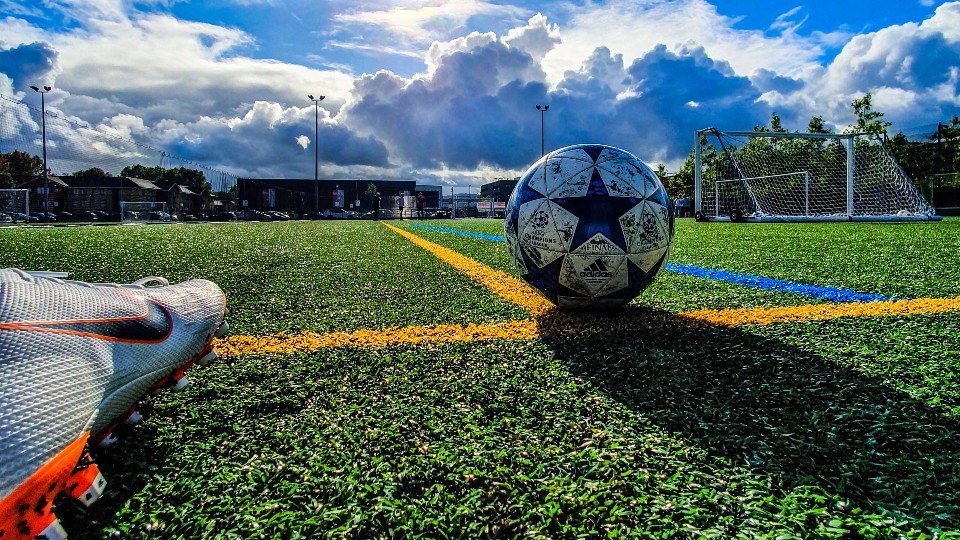
Take a soccer ball, for example. Depending on how frequently it’s used, along with storage and care factors, your soccer ball could give out after a few years or just a few months. Then it will live out the rest of its life – potentially hundreds of years – breaking down into microplastics in a landfill.
Why sports balls end up in landfills
Whether you’re chucking out deflated soccer balls, bald tennis balls, or dead cricket balls, these will usually end up in landfills, as they’re not typically accepted by council recycling services. The main reason for this comes down to economics: what it costs to recycle them is higher than the value of the resulting recycled materials.
This is because they are made using a mix of materials. A soccer ball for example usually consists of a plastic cover, nylon and foam linings, a rubber air bladder, and synthetic or textile stitching. These materials must be separated to be processed and recycled into something new. While this is technically possible, it increases the cost of recycling, and many local recycling services can’t cover this.
The solution? Recycle every kind of sports ball with TerraCycle
You can recycle every sports ball under the sun alongside other fitness equipment with TerraCycle’s Sporting Goods Zero Waste Box in Australia and New Zealand. The price covers production of the box, shipping to and from you, sorting, cleaning, processing, and recycling.
Once TerraCycle receives the Zero Waste Box at a local Material Recovery Facility (MRF), the contents are inspected to remove any non-compliant waste and sort the sporting goods into relevant material categories. These are then sent to processing partners to be recycled using various techniques depending on the specific material and the processor’s technology.
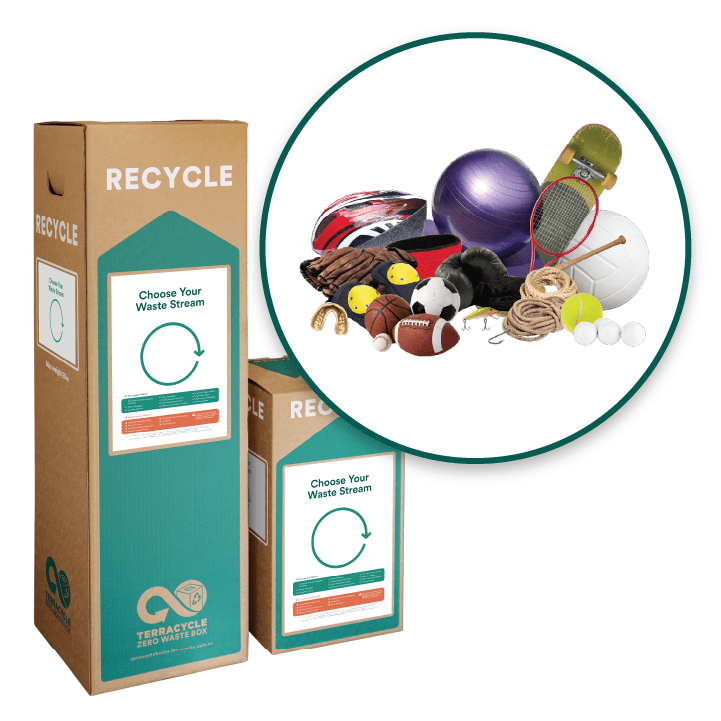
For a tennis ball, this involves shredding and granulating the felt covering and rubber interior into a raw format. These materials often return to the sporting world, as they can be used in the construction of horse riding arenas and tennis court surfacing.
Other synthetic balls like those used in soccer, golf, basketball, netball, and football are first categorised by composition. This means items like basketballs, netballs, and rugby balls can often be processed together.
They are then shredded and granulated before the plastic polymers are isolated by processes like liquid density separation or near infra red separation. Once these materials are processed into raw formats, they can be used by manufacturing companies to create new products such as plastic lumber to build outdoor furniture and playgrounds.
Become a sporting goods recycling gold medalist for your business
Do you want to keep more sports balls and equipment out of landfills? Whether you’re a business leader or a passionate sportsperson, you can help move the sporting world in a positive environmental direction by championing recycling in the industry.
Get in touch with our team at anzsales@terracycle.com to learn how we can help you set up tailored recycling programs, or submit a quick enquiry at our partnerships hub to get the recycling ball rolling.
 TerraCycle News