
Laboratories around Australia and New Zealand are seeking solutions for an industry-wide problem: waste. Whether these innovators are advancing medical science, food production, manufacturing, or other essential research, they are finding ways to recycle common lab waste and avoid sending it to landfills or incinerators.
Flexible recycling solutions for your lab
Looking for lab recycling solutions that fit your workplace? We offer Zero Waste Boxes designed for different types of waste, from PPE to mixed rigid plastics.
Explore the range:

Opportunities for lab recycling in Australia and New Zealand
The opportunities to recycle more in labs are vast. For example, in 2022 research facilities at the University of New South Wales created 120,000kg of chemical waste and 56,000kg of biological waste. Only 16% of this was recycled.
Although a lot of this lab waste is hazardous and requires specific disposal or recycling measures, Aussie and Kiwi university lab managers have discovered safe and effective ways to collect and recycle complex waste streams.
Many are using TerraCycle’s recycling solutions and other waste minimisation measures to qualify for global sustainability certifications, all without impacting their research outcomes. In 2021, UNSW labs became the first in Australasia to be accredited via the Laboratory Efficiency Assessment Framework (LEAF), while La Trobe University became the home of Australia’s first My Green Lab.
What is it about lab waste that makes it such a challenge to recycle? Material composition, hazardous waste, and access to recycling solutions all have an impact.
Why is lab waste hard to recycle?
Laboratory waste is complex and diverse. It may include anything from acids and pharmaceuticals to blood and tissue samples, flammable materials, and other dangerous chemicals. Items like these which pose health or environmental risks are considered hazardous waste, and must be classified and disposed of in line with New Zealand or Australian state and territory regulations.
The good news is, there are a lot of opportunities for labs to increase their recycling rates – here’s where to start.
Disposable items like personal protective equipment (PPE), rigid plastic tools like beakers, centrifuge tubes, and trays can all be recycled, even though they are made from mixed materials. While they won’t be accepted by kerbside recycling services, there are solutions to keep these items out of landfills.
For example, disposable face masks are usually constructed with three layers of varying plastic polymer fibres, and can include a metal nose clip. In order to recycle these materials into something new, they must be separated into different material streams and recycled by specialist processors.
How to recycle lab waste with TerraCycle
TerraCycle has a specialised range of Zero Waste Boxes for recycling lab equipment in Australia and New Zealand.
There are boxes to recycle common lab waste categories – like centrifuge tubes and rigid lab plastics – or multi-purpose options like the PPE box (available in both Australia and New Zealand) for all kinds of protective gear including disposable face masks, garments, ear plugs, hair nets, gloves, and safety glasses.
Whatever your lab recycling needs are, the price covers production of the box, shipping to and from you, as well as sorting, cleaning, processing, and recycling.
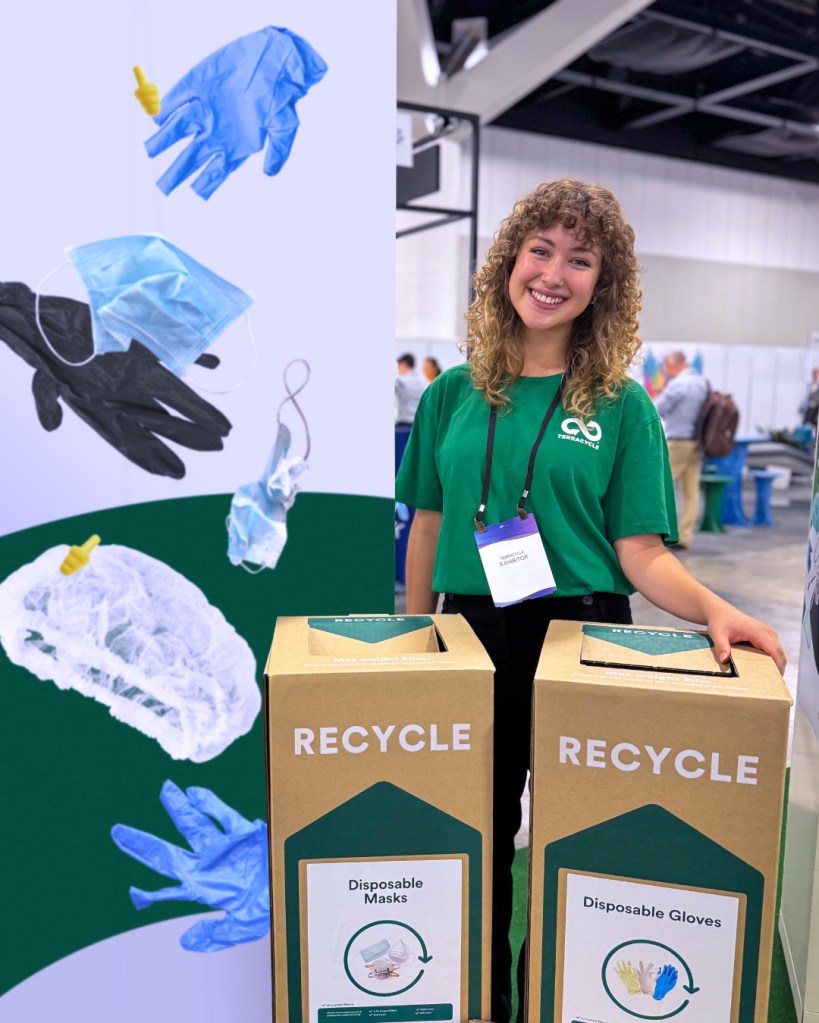
After you fill the Zero Waste Box and ship it to TerraCycle, it will arrive at a local Material Recovery Facility (MRF).
The contents are checked in, manually inspected, and sorted by material type before they are sent to processing partners to be recycled. How each item is broken down into usable raw formats will depend on the specific material and the processor’s technology.
Personal protective equipment (PPE) like gloves, masks, earplugs, and hair nets are quarantined if necessary, then all materials are cleaned and shredded. Metal components are smelted and formed for use in secondary metals manufacturing, while clean plastics are sorted and mixed to create recycled plastic blends. Rigid lab plastics like centrifuge tubes, safety glasses, and beakers are size-reduced (i.e. shredded or ground) and cleaned, then go through a melting process to be reformatted into a usable raw material.
Depending on their composition, these items can be used to construct things like plastic lumber, composite decking, outdoor furniture, watering cans, plastic shipping pallets, and much more.
Please note: Like most other recycling services, TerraCycle cannot accept hazardous waste. Any items which are contaminated by blood or bodily fluids, or are otherwise classified as ‘hazardous’, must be disposed of through the relevant state or national procedures.
Your next lab recycling steps
If you’re an innovative thinker leading lab-based research, you’re probably already striving to make your operations as sustainable as possible. Recycling more lab waste can help!
Get in touch with our team at anzsales@terracycle.com to learn about our bulk order tiered pricing for more comprehensive lab recycling solutions, or submit a quick enquiry at our partnerships hub. Ready to start recycling right now?
Shop our Zero Waste Box laboratory collection:
 TerraCycle News