
If food waste were a country, it would be the third-largest contributor to greenhouse emissions globally. While organic waste can break down in a matter of weeks – compared to plastics which take hundreds of years to decompose – it still presents a massive environmental threat.
The problem takes shape when food scraps end up in landfills.
When you pack organic waste into an oxygen-deprived environment alongside non-organic rubbish, it decomposes slowly and releases methane. This gas is around 25 times more potent than carbon dioxide.
A far better option than throwing your food scraps in the bin is to start a home compost. Here are a few tips on how you can start composting at home – even if you live somewhere with no outdoor space.
Choose your perfect home compost bin
There are plenty of options at various price points to compost at home if you have limited or no outdoor space. You can:
- Purchase a countertop food composter. An indoor composter uses heat, aeration, and pulverisation to break down food waste. They’re contained, so you don’t need to worry about any bad smells.
- Check if your local council offers food organics kerbside pick-up. These are often called FOGO (food and garden organics) kerbside collections. Storing organics in a small freezer or fridge container can help minimise odours until bin day.
- Set up a vermicompost (aka a worm farm). Some smaller worm farms can even be kept indoors. The liquid your worms produce is a fantastic natural fertiliser!
- Check out an app called Share Waste. This handy tool connects Aussies and Kiwis with neighbouring households and businesses already composting and looking for more organic materials.
If you have an outdoor space like a garden or balcony, there are even more options.
- D.I.Y composts. If you want to save money and avoid the environmental impact of buying a new compost bin, you can always make your own. Here’s a great guide to building your own home compost bin.
- A tumbler compost. This is a fully sealed container that can be rotated to mix the composting materials. It helps contain the heat generated by the composting process, thereby speeding up the process of converting kitchen and yard waste into nutrient-rich fertiliser.
- Continuous composts. Continuous composters require less work than other composting methods. All you have to do is put your waste in the top, wait for it to break down, and then open the bottom of the bin to collect your finished compost.
What can and can’t go in a home compost
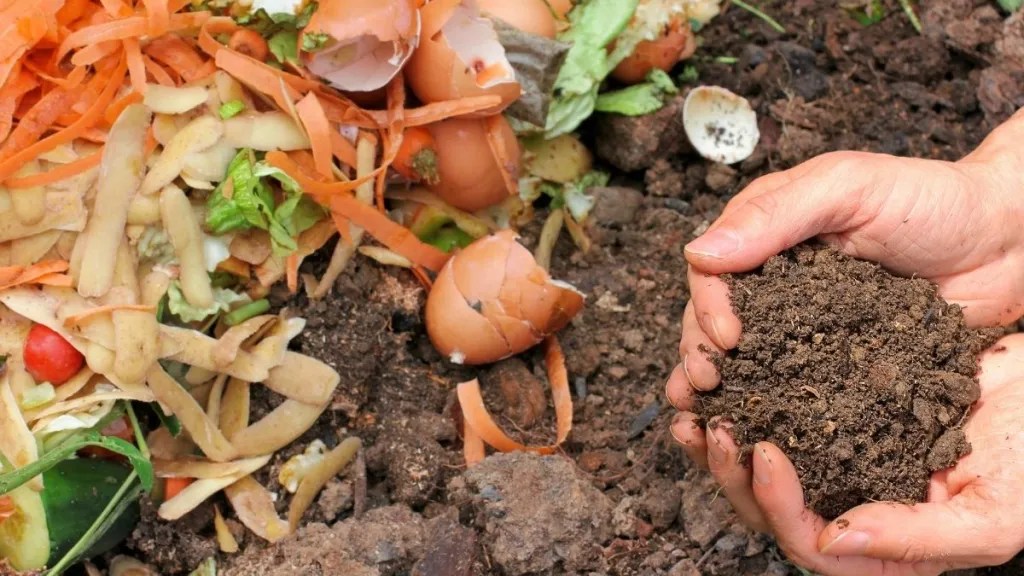
You CAN compost old food scraps, including eggshells, fruits, veggies, bread, and other plant-based processed food. These are called the “greens” of composting. Leaf litter, plants, grass, cotton, paper, cardboard, and even hair can also be composted – these are called “browns”. You need a balance of green and brown materials to create a healthy compost.
You CAN’T compost dairy or meat products, or any non-organic rubbish (including glossy plastic-coated paper).
REMEMBER: Some products claim to be “compostable” or “biodegradable” (like some plastic bags or takeaway food containers), but they are usually only compostable in industrial facilities. They likely won’t break down in your home compost.
Top tips to maintain your home compost
- Aerate your compost every few weeks by turning it over (unless you’re using a continuous composting system). Oxygen is key to the composting process, and ensures worms and other insects which help maintain it can survive and thrive.
- When you add fresh material, make sure you mix it in with the lower layers.
- Maintain the moisture levels in your compost weekly. A good way to tell if your compost is too dry is to pick up a handful; it should be about the consistency of a damp sponge.
- Keep your compost in a cool, dry, and shaded place.
- Try to shred or cut up materials before placing them in your compost. This helps things break down faster.
- Do not put dairy or meat products in your compost.
These kick-starter tips are here set you up for success on your composting journey. Once you’ve mastered the basics, there is loads of great information and tips out there to help you finesse the art of composting. Start with the video below!
And to keep even more hard-to-recycle rubbish out of landfills, make use of TerraCycle’s free recycling programs in Australia and New Zealand.
 TerraCycle News
5 thoughts